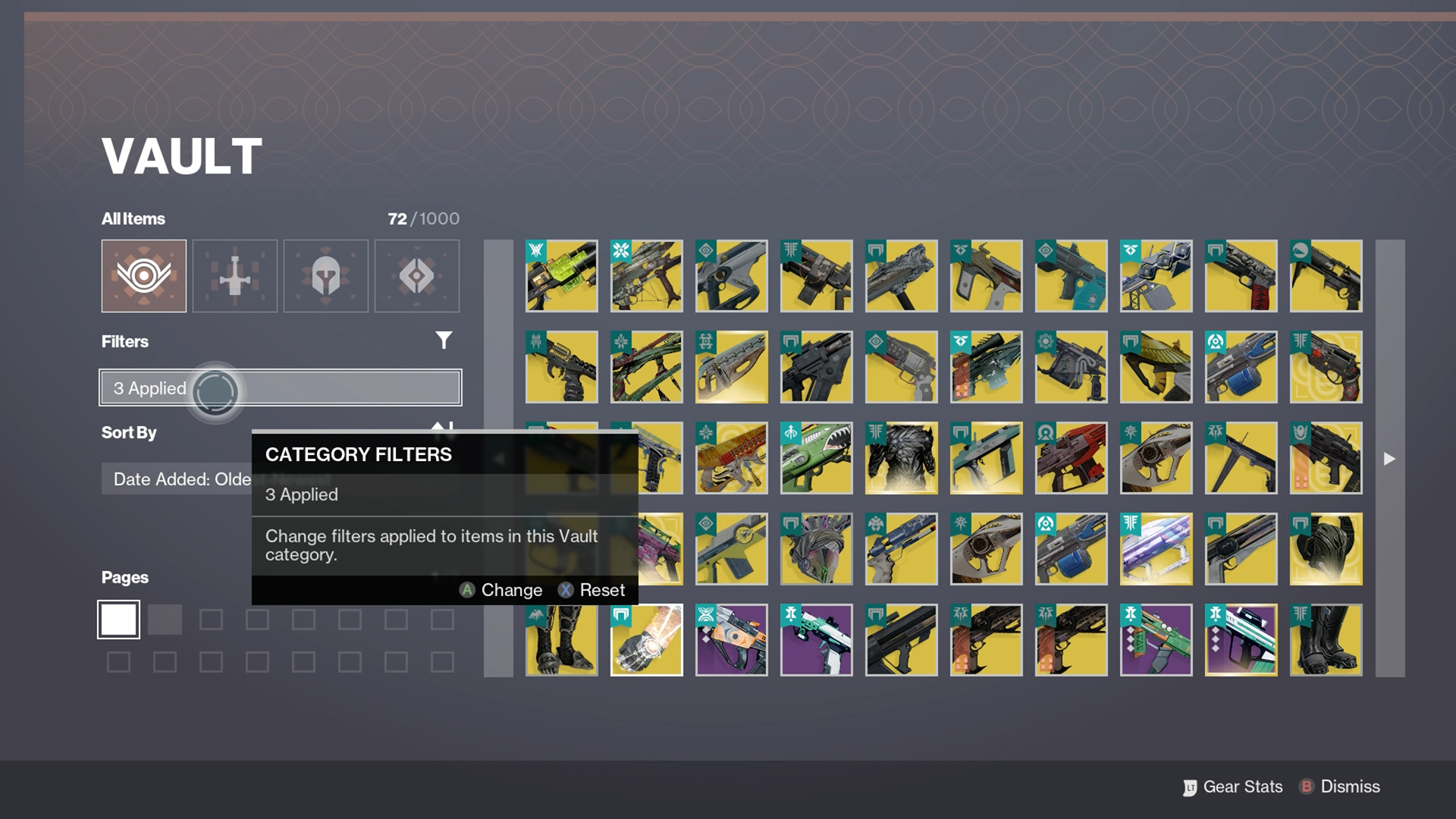
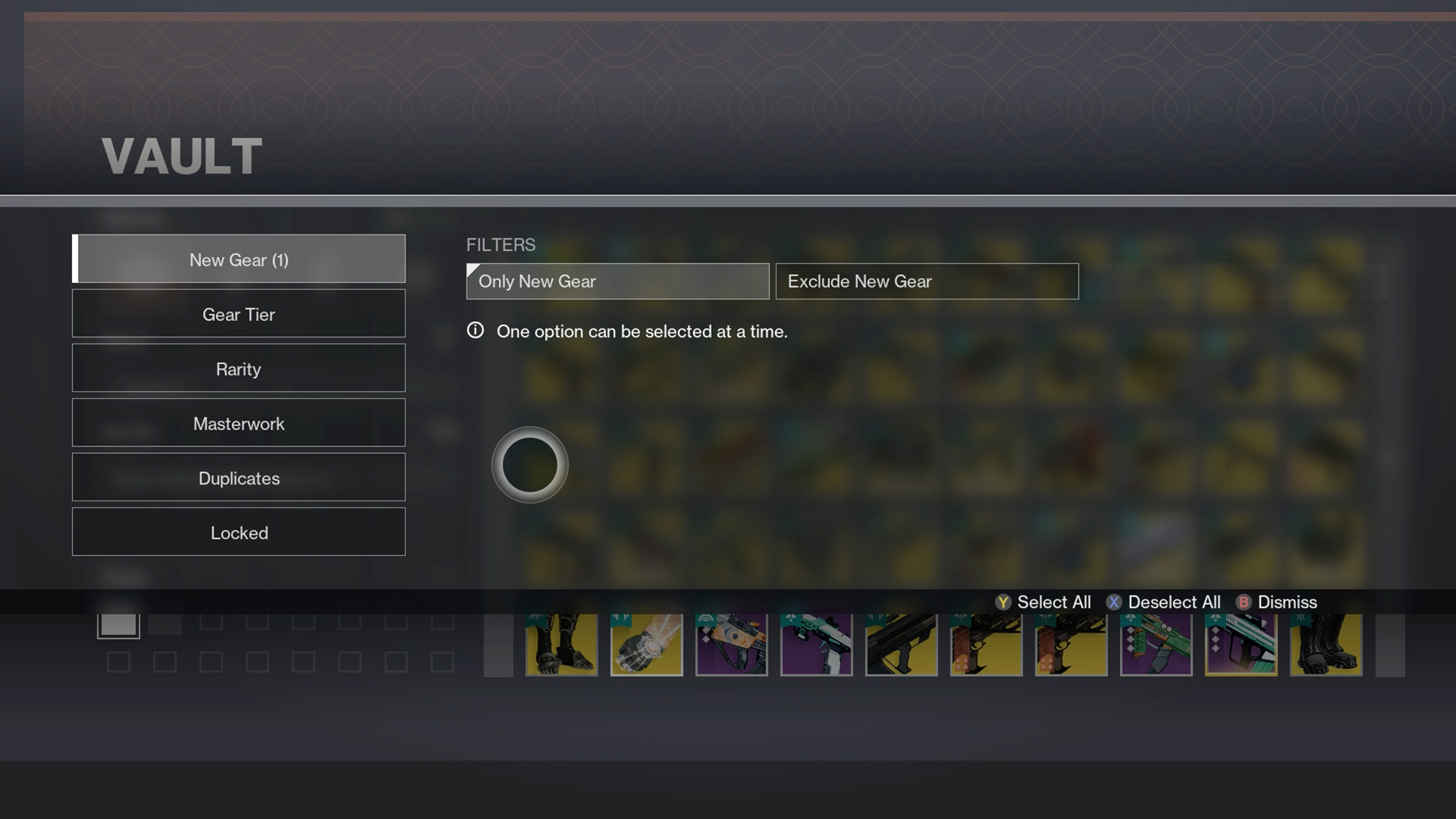
Destiny 2: Vault Updates
Introducing New Sort and Filter Options
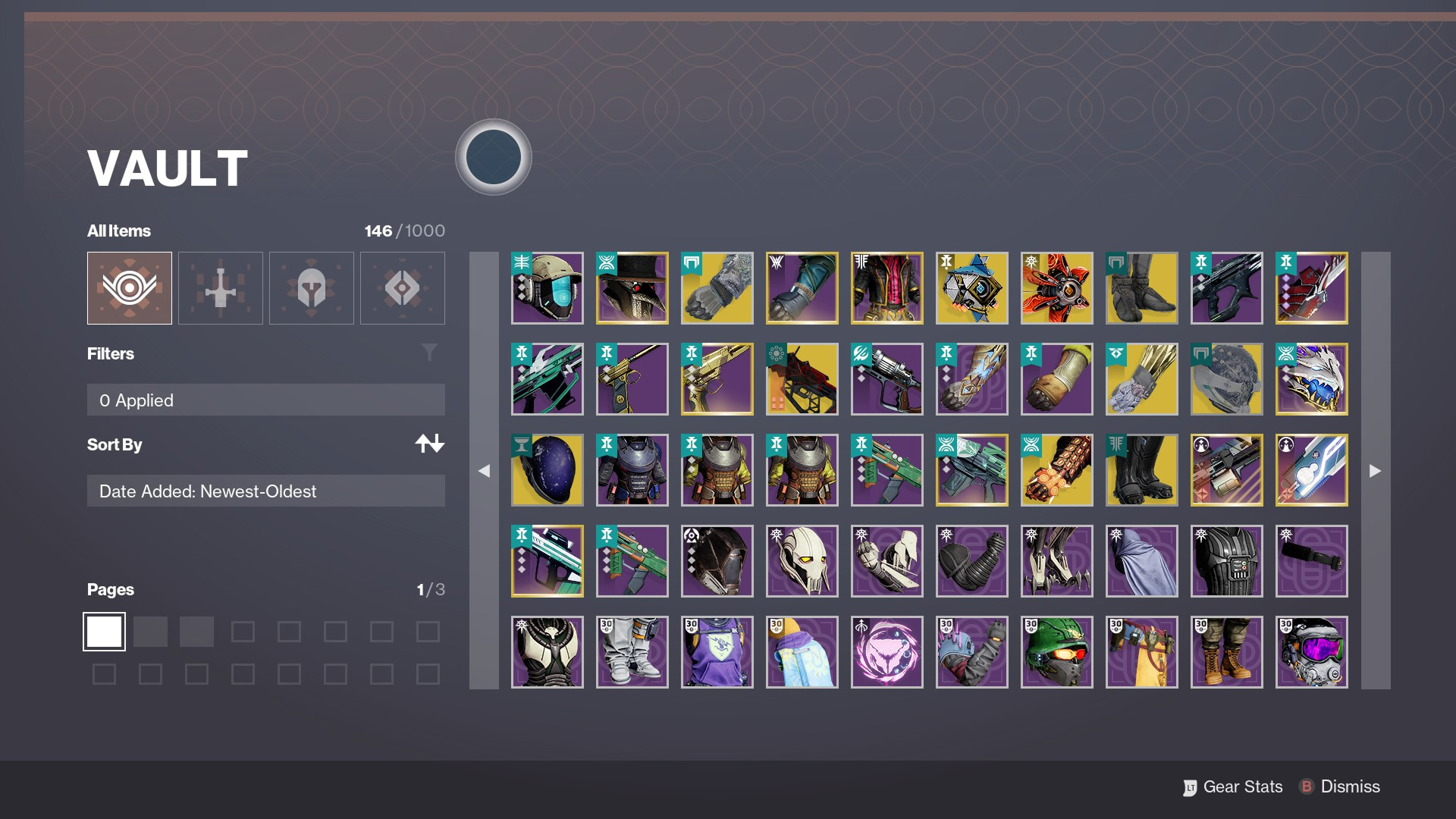
Final Vault Iteration
*More documentation work available on request.
For years, the Destiny 2 community had expressed their wish for better ways to manage their Vault, which holds a collection of accumulated weapons, armor, and other equipment.
As it was, the Vault lacked filters, and the available sort options didn’t return meaningful or clear search results.
The need for robust filtering and sorting was apparent after The Edge of Fate, which introduced additional item characteristics, such as Gear Tier and Armor Archetypes.
- Release Title: Renegades
- Release Date: December 2nd, 2025
- 300 additional Vault slots
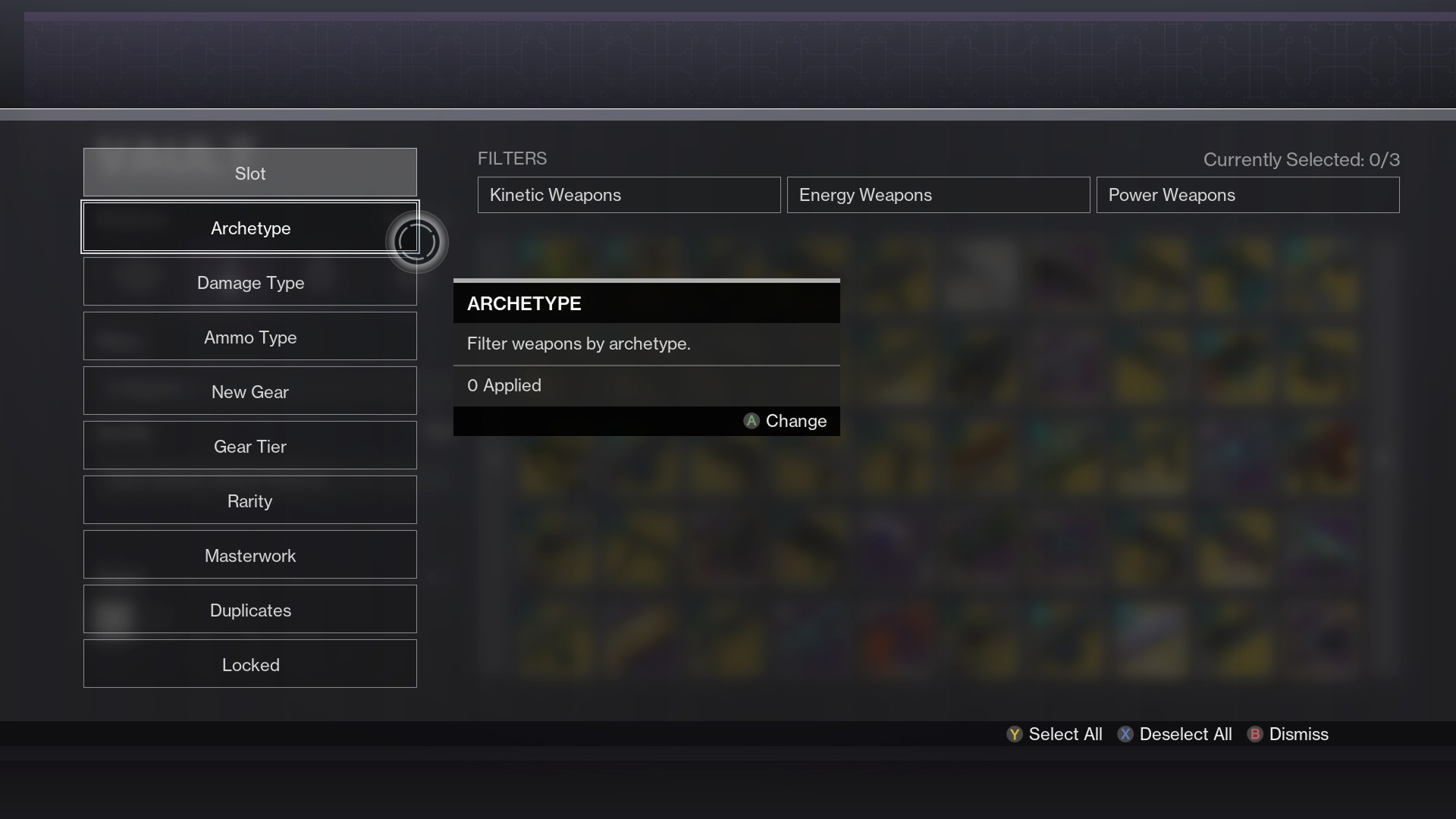
- New multi-filter selection system
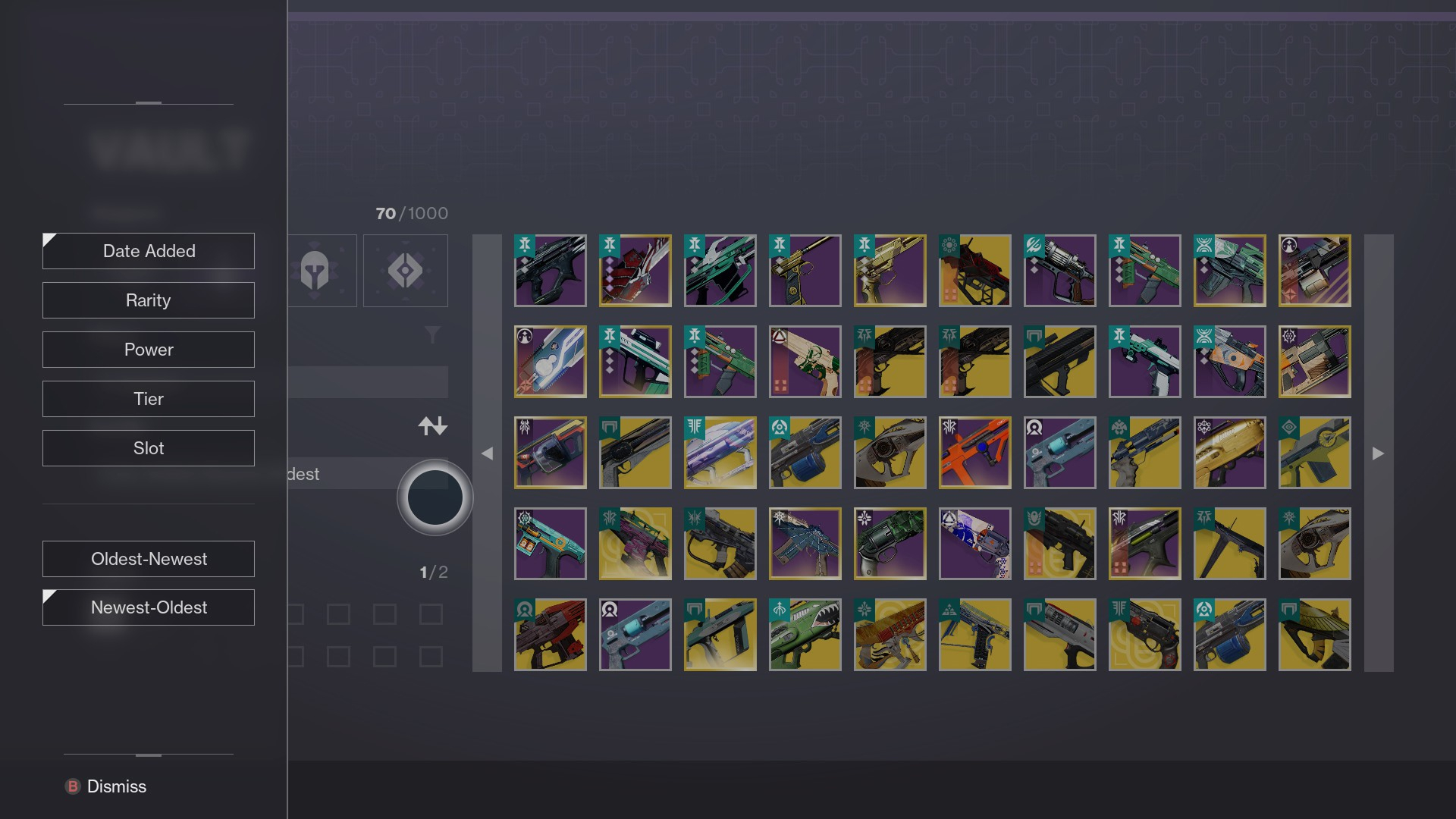
- Updated sort options
So why had the previous Vault created issues for players?
A short investigation didn’t take long to uncover the reasons:
- Parsing up to 700 items, including duplicates and variations.
- Sorting limited to four options - Default, Quantity, Rarity, Newest.
- Sorts didn’t cover the range of category-exclusive characteristics, or combinations.
- Unclear feedback: “What does Sort by Default actually mean?”
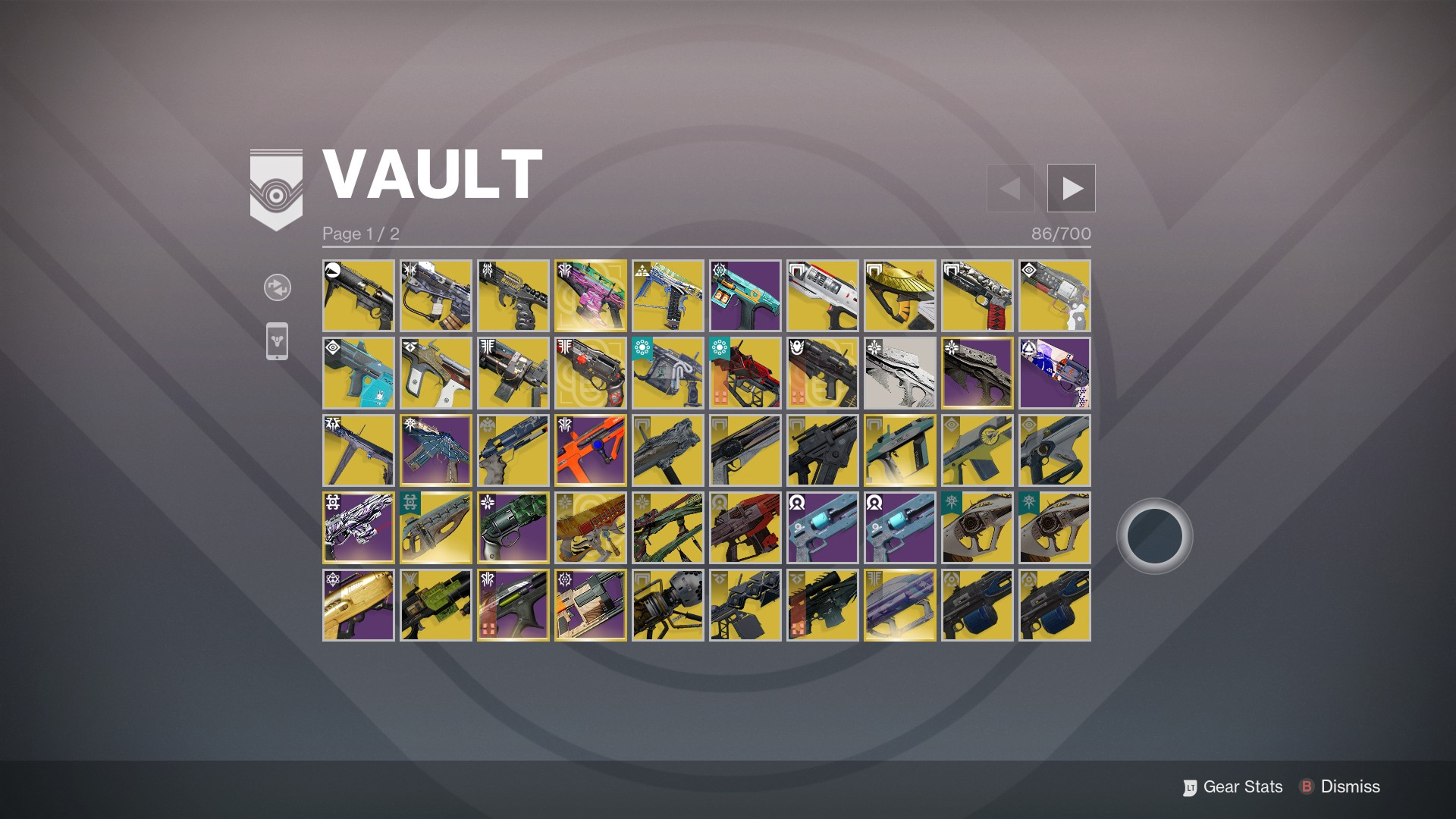
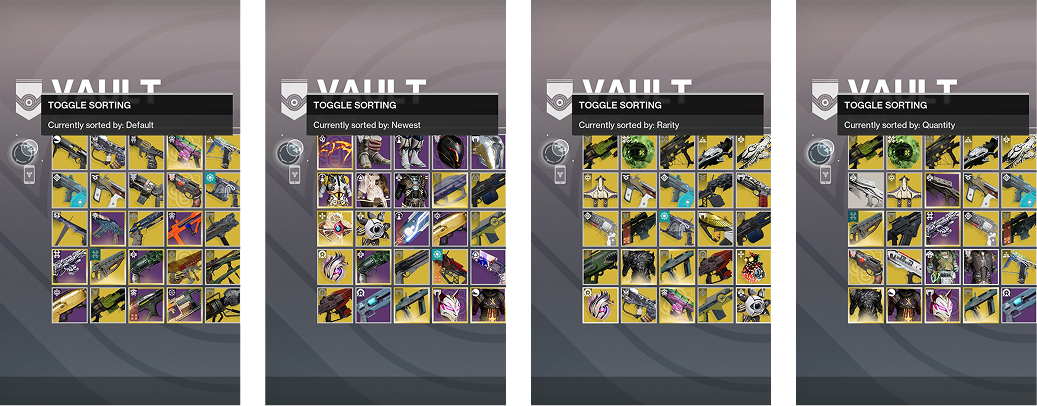
During a snack break, a colleague expressed their own frustrations: “Sometimes I just want to see my weapons, and the sorting doesn't help me find the stuff I actually want.”
They went on to say that they have tons of items they don’t even use, but navigating the Vault was so tedious they’d rather leave them than clear them out.
- Identifying shared and category-exclusive item characteristics.
- Determining item characteristic combinations – reinforcing need for stackable filters.
- Examining existing systems frameworks.
- Updating a list of proposed filters and sorts.
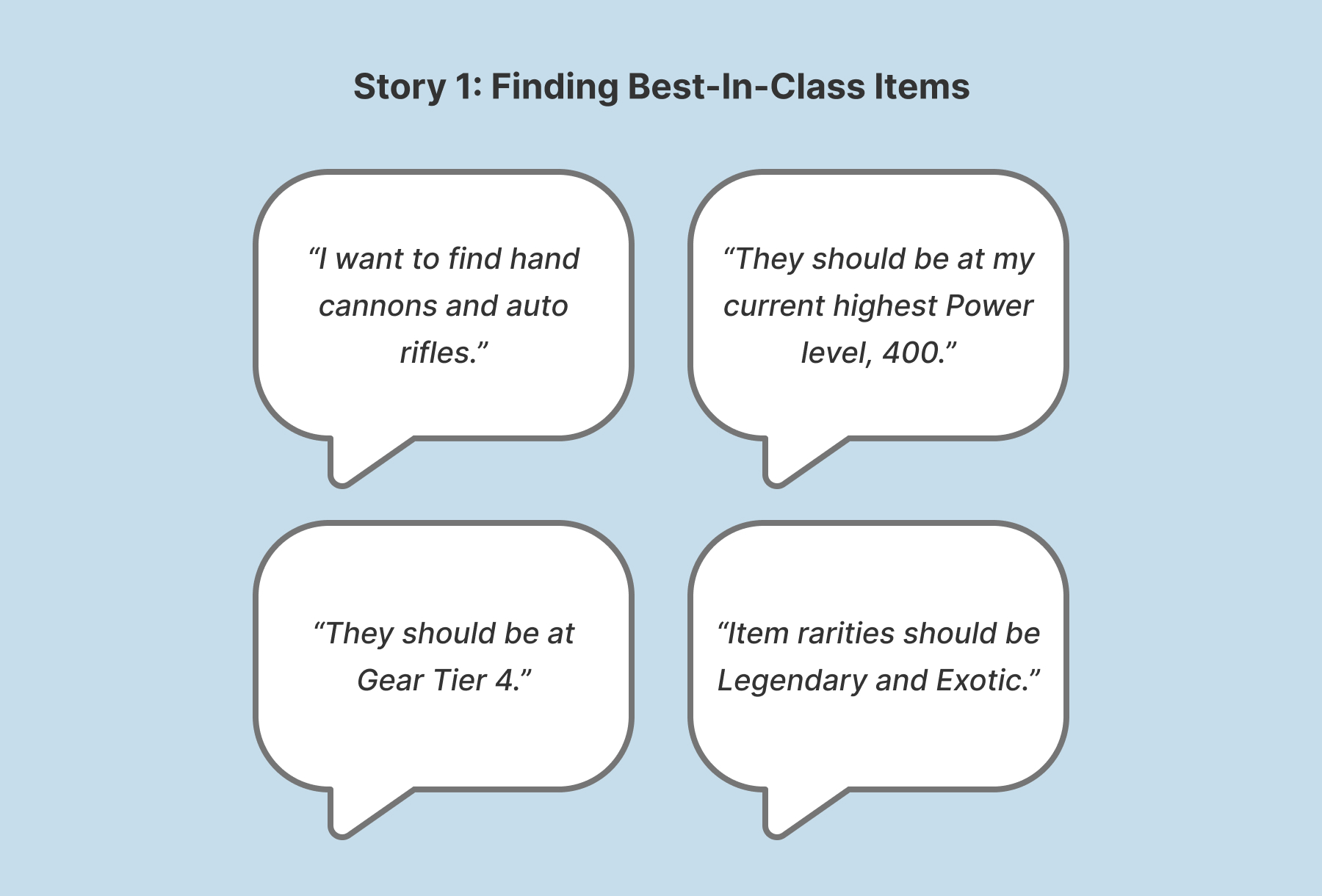
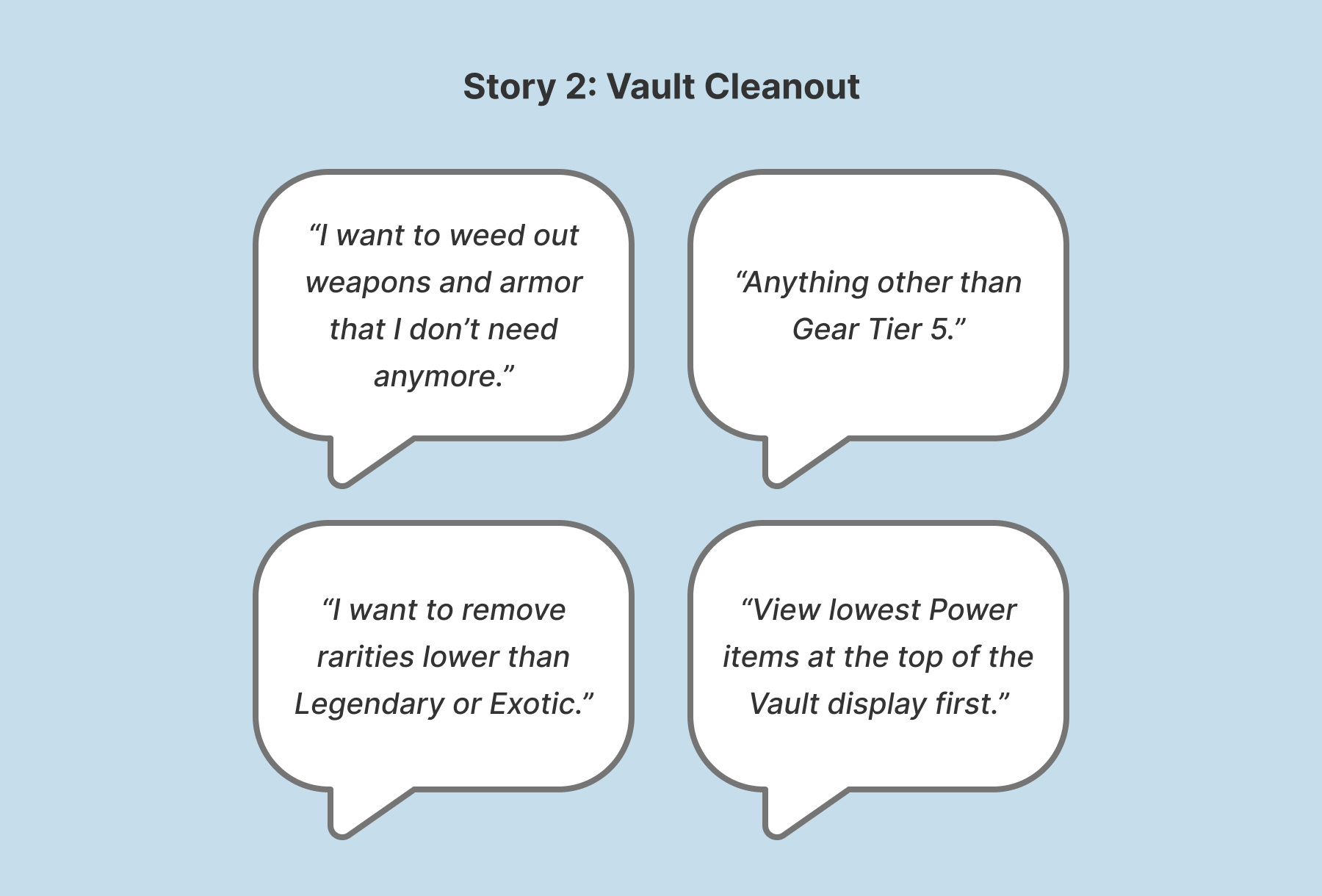
- Building interaction flows based on player use cases.
During the process, we kept consistent check-ins with other teams to stay aligned and on the lookout for immediate and long-term issues.
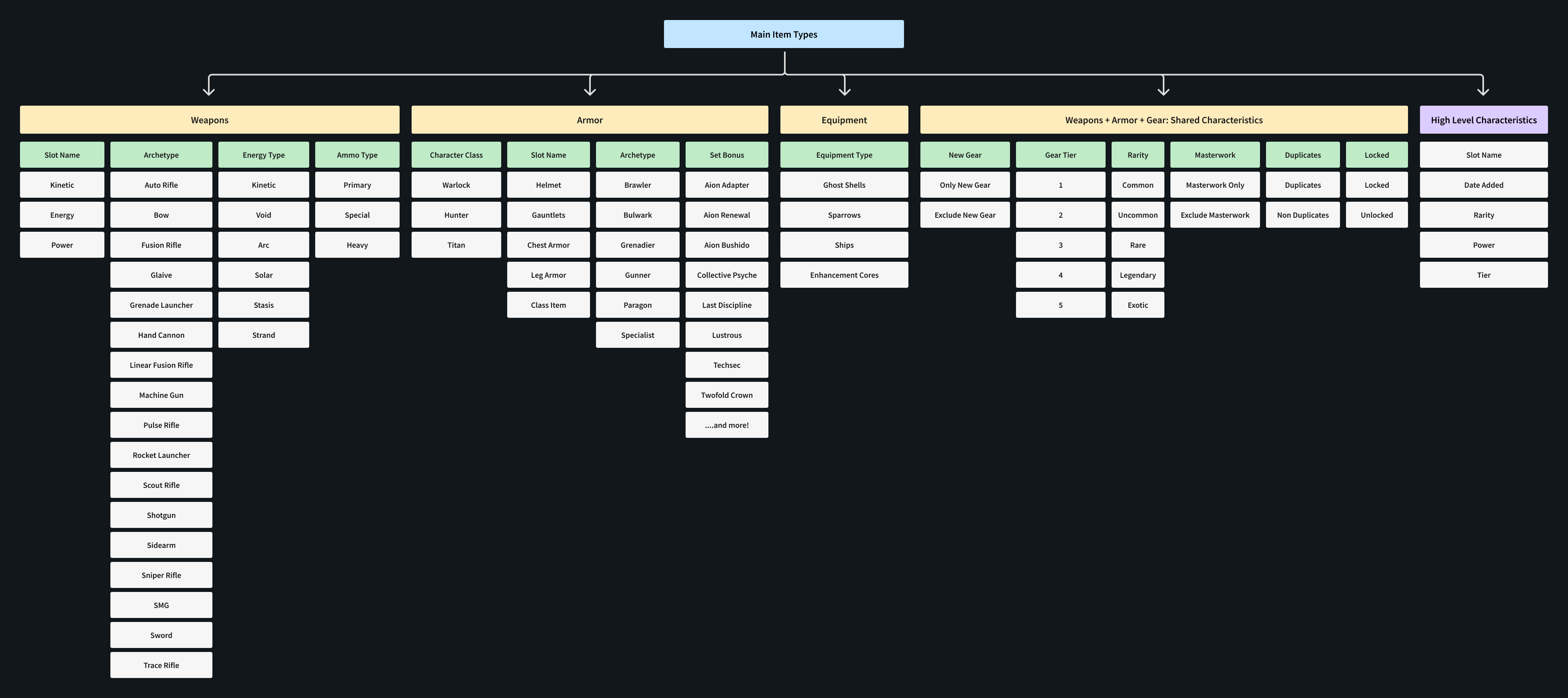
After several drafts, we eventually we landed on the final filters and sort list:
It helped to have many eyes and feedback sessions on the wireframing process, as area knowledge feedback across multiple fields pinpointed problems with interactions, feedback states, state changes, and displays.
Because of the strong feedback-driven process, our technical, engineering, and visual teams were well-informed and led to smooth handoffs.
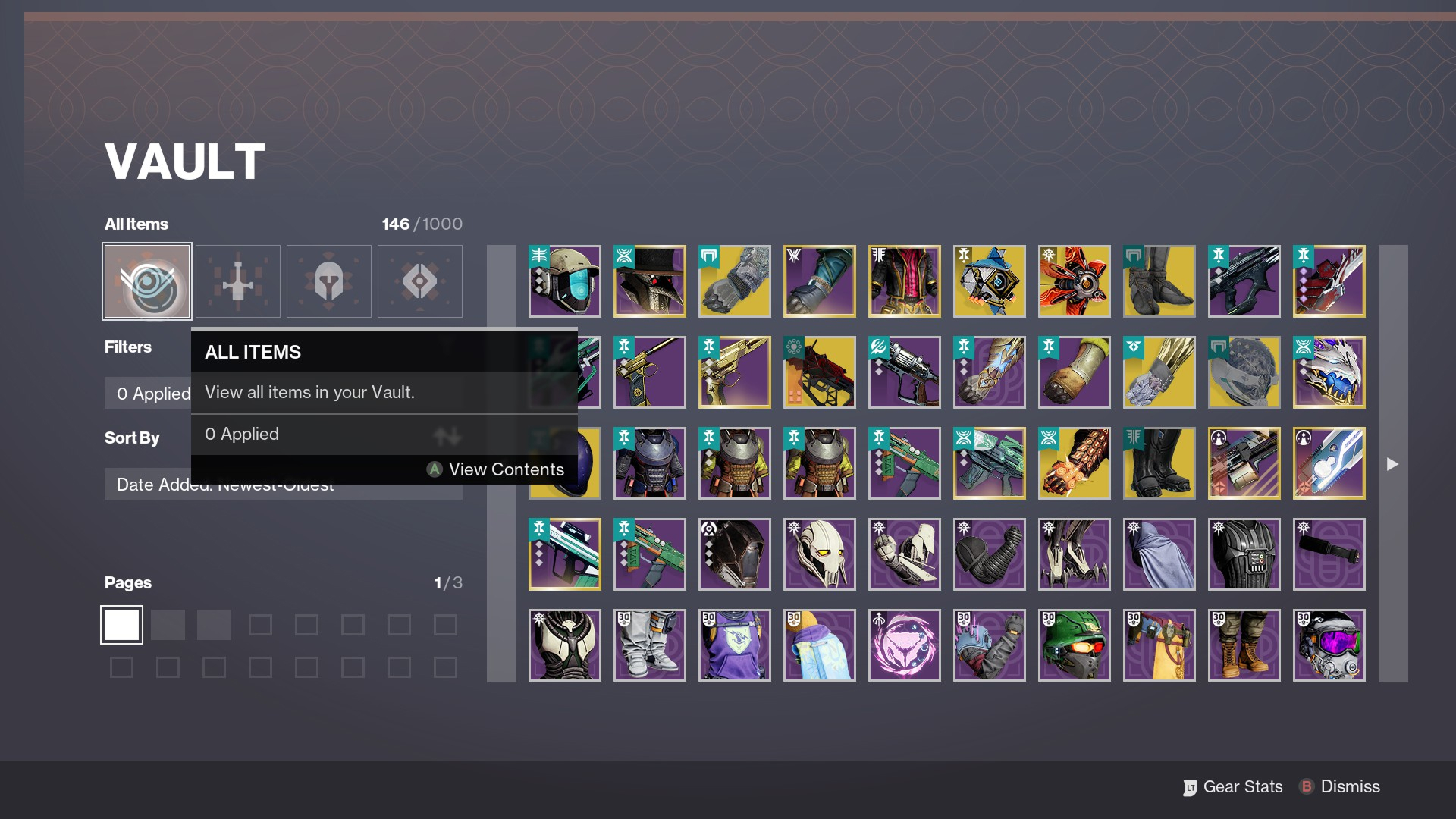
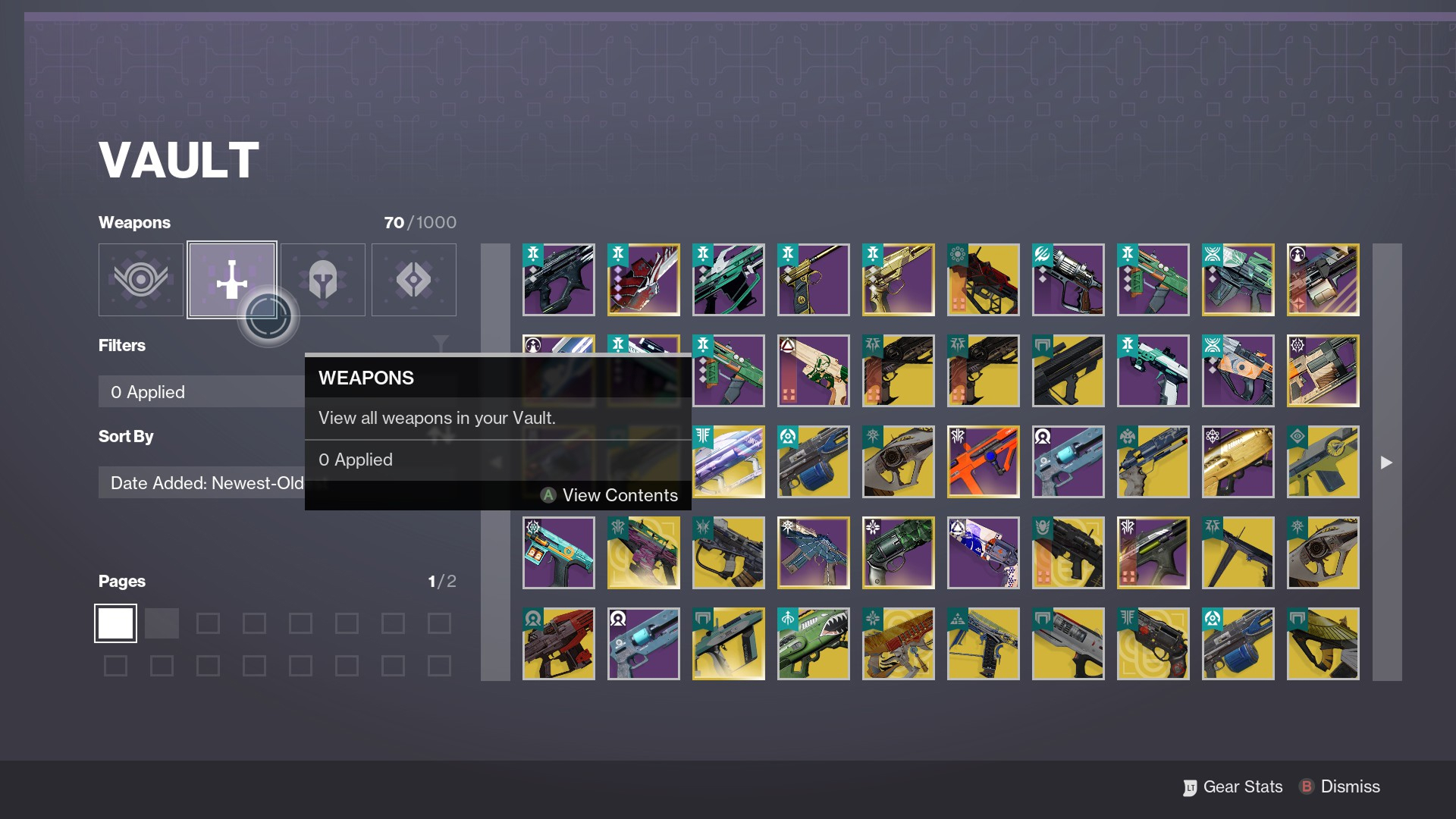
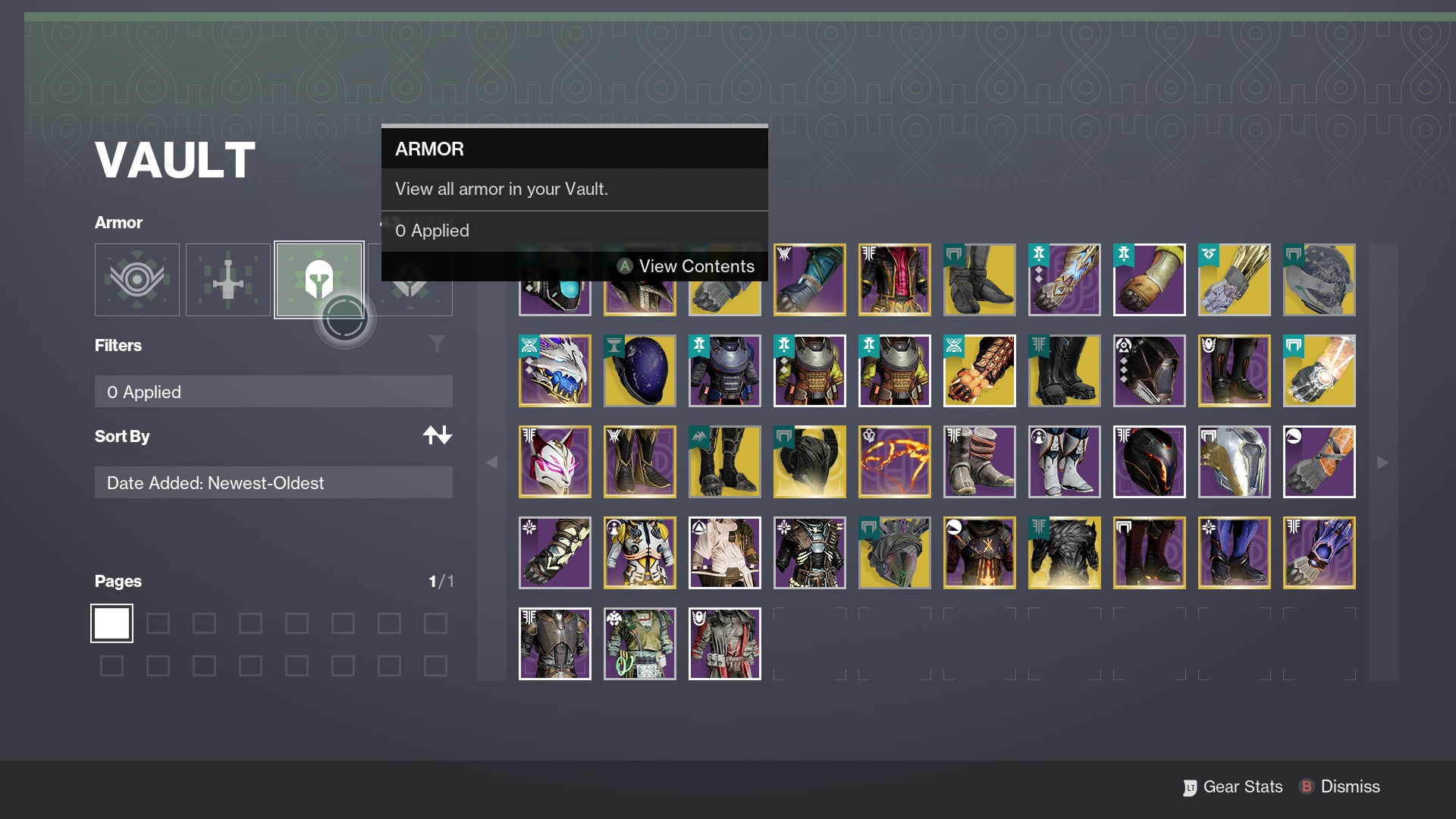
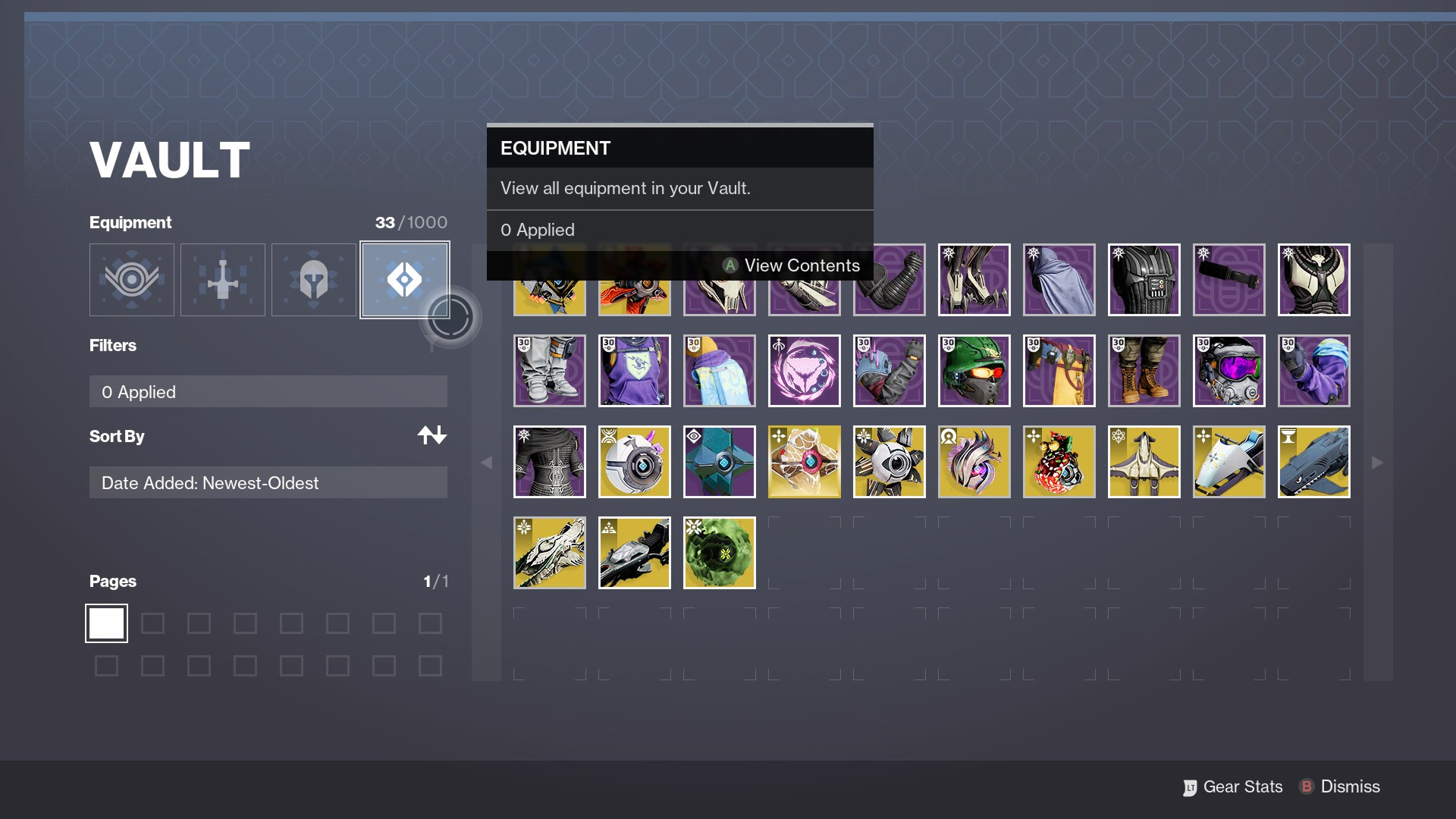
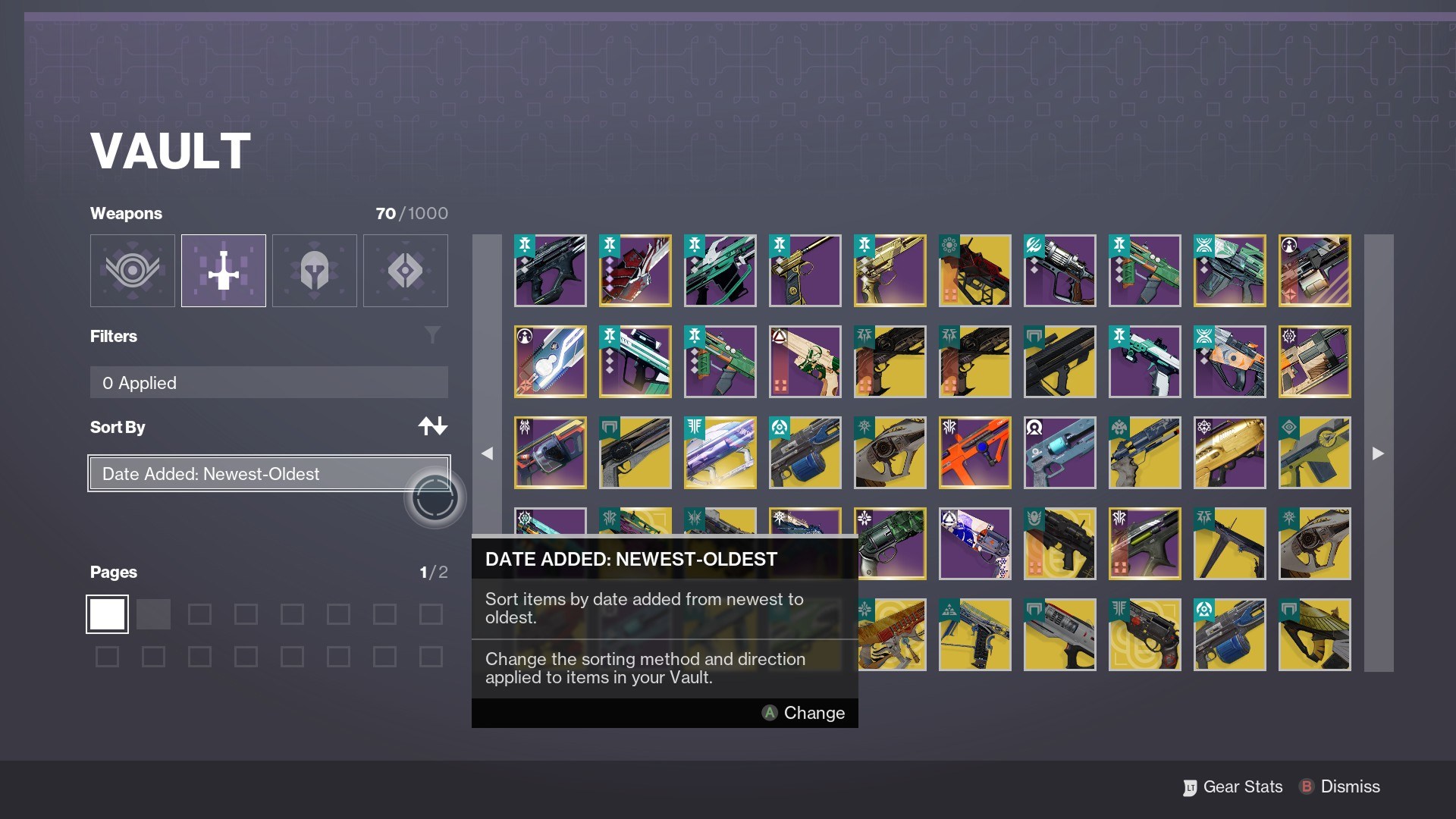
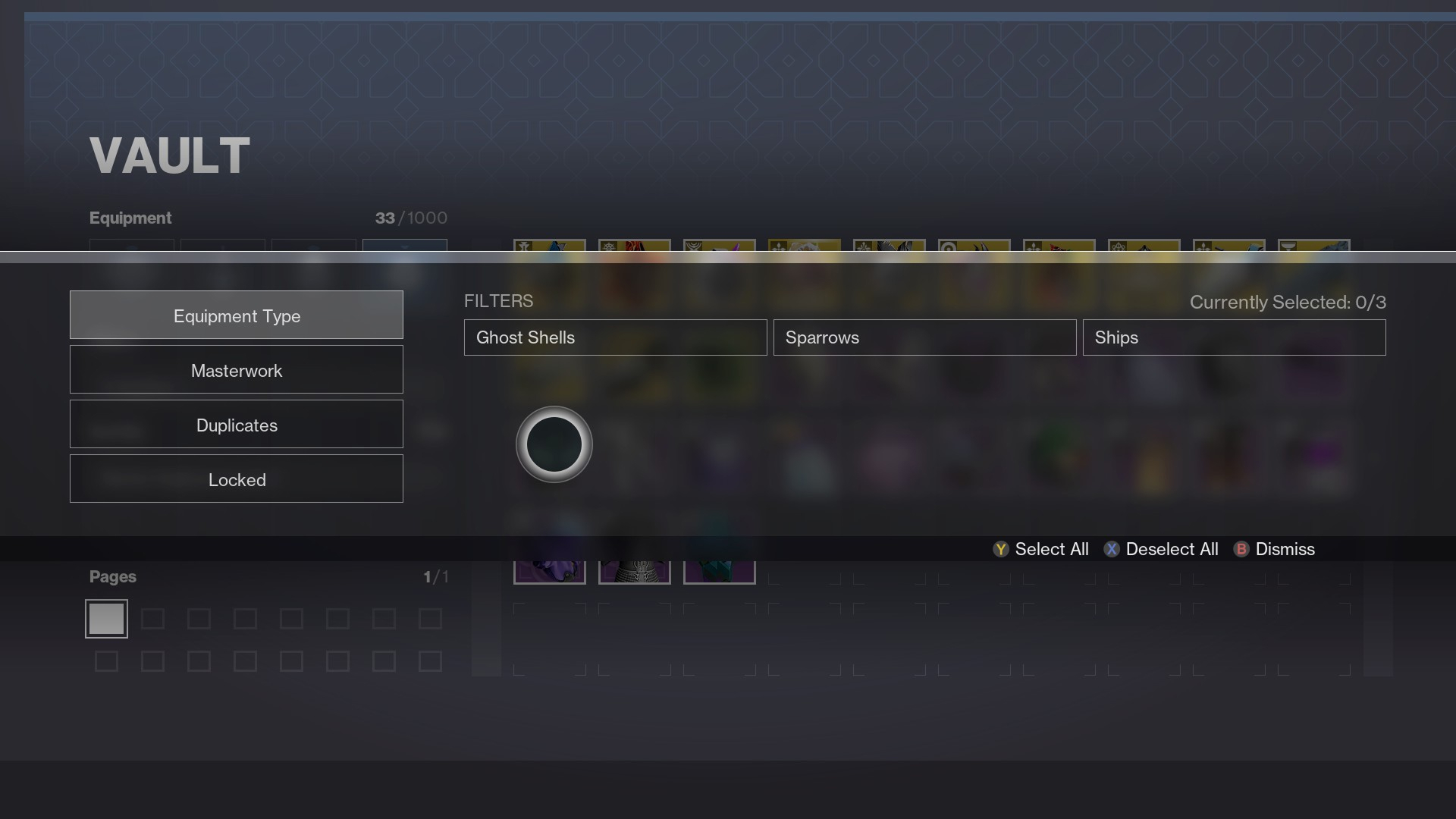
Our visual designer brought the Vault to life with updated layouts, new direct pagination, color language, and iconography: